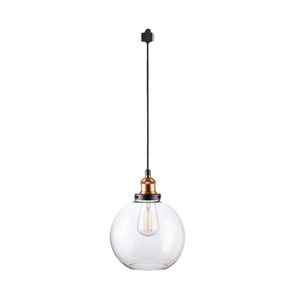
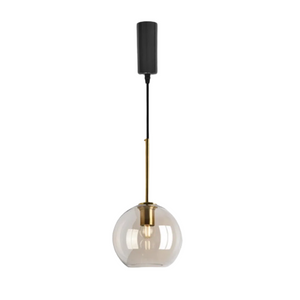
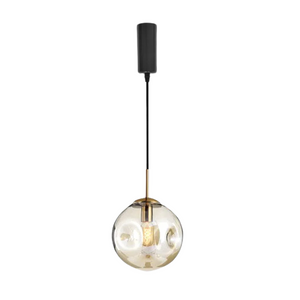
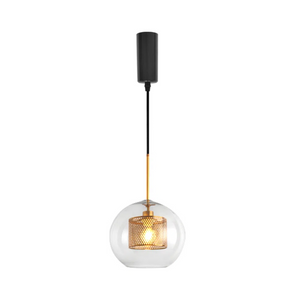

Track lights are fantastic—until you want remote control track lighting that dims for movie night or adjusts from your couch. What do most people do? They spend $3,000+ replacing everything with new remote control track lighting systems and hiring an electrician. But here's the thing: you don't actually need to do any of that. Smart dimming adapters transform your existing fixtures into remote control track lighting in about ten minutes. No rewiring, no electrician, no massive bill. Just plug it in and you're done!
What Is Remote Control Track Lighting?
Remote control track lighting lets you adjust your track lights from anywhere in the room—or anywhere in the world. Instead of walking to a wall switch, you control brightness, scenes, and schedules using:
- Handheld remote controls for quick adjustments
- Smartphone apps for full control and programming
- Voice commands through Alexa, Google, or Siri
- Wireless wall panels that mount anywhere without wiring
Traditional track lighting requires a trip to the wall switch every time you want changes. Modern remote control track lighting systems put full control in your hand, on your phone, or respond to your voice—making your lighting as flexible as your needs.
Why Traditional Track Lights Can't Go Smart
Most track lighting systems were designed for one job: turn on at full brightness, turn off. The power supply delivers constant electricity with no ability to adjust levels or communicate with other devices.
What's Missing
Traditional track lights have three problems that prevent smart control:
1. Binary power supply: Electricity flows at full strength or not at all—no dimming capability built in.
2. No wireless connection: These systems have no WiFi, Zigbee, or Bluetooth. They can't connect to phones or smart home hubs.
3. Incompatible with smart switches: Installing a smart dimmer switch doesn't help. Non-dimmable LED fixtures just flicker, buzz, or get damaged when you try to dim them.

Why This Actually Matters in Daily Life
This creates practical problems in daily life:
- Commercial spaces: Retail stores can't highlight different products throughout the day. Restaurants stay stuck at one brightness level—no transition from bright morning energy to cozy evening ambiance. Creative use of track lighting can change the atmosphere of a space throughout the day.
- Homes: Kitchens can't shift from bright cooking light to soft dinner ambiance. Home offices lack flexibility for video calls versus focused work. You miss out on gradual brightness changes that support natural wake/sleep cycles.
- Energy waste: Lights run at full power whenever they're on, burning unnecessary energy and driving up electricity bills. You can't take advantage of LED efficiency at lower brightness levels.
Where Most "Solutions" Fall Short
When people try to make their track lights smart, they usually hit three dead ends. Here's how common solutions compare:
| Solution | Creates True Remote Control Track Lighting? | Cost | Installation Time | Key Drawbacks |
| Complete System Replacement | ✅ Yes | $2,000-$5,000+ | 1-3 days |
|
| Smart Bulbs in Track Fixtures | ⚠️ Limited |
$30-60 per bulb ($150-300 for 5 bulbs) |
15-30 minutes |
|
| Complex Retrofit Kits | ✅ Yes | $500-1,500+ | 2-4 hours (professional) |
|
| Smart Track Adapter (for comparison) | ✅ Yes | $80-200 | 5-10 minutes (DIY) |
|
None of the traditional approaches address the real issue efficiently. Your bulbs and fixtures are fine. Your track rail works great. The problem is the power supply—it needs to become smart, not your bulbs or your entire system. That's exactly what smart track lighting adapters solve.
How Smart Adapters Create Remote Control Track Lighting
A smart track lighting adapter is a compact device that plugs between your existing power supply and track rail. It converts standard on/off electricity into adjustable, controllable power—no cutting wires, no replacing fixtures, just plug it in.
What's Inside
Smart adapters contain three key components:
- Dimming chip: Regulates power flow using PWM (Pulse Width Modulation) technology. This rapidly switches power on and off—too fast for your eyes to detect—allowing smooth 0-100% dimming even with non-dimmable LED fixtures.
- Wireless module: Connects to your control devices via WiFi, Zigbee, or Bluetooth. WiFi offers smartphone control, Zigbee integrates with smart home hubs, and Bluetooth provides local control without internet.
- Safety circuitry: Handles voltage regulation, surge protection, and heat management to keep everything running safely.
Compatibility Check Before You Buy
Verify these four things to ensure the adapter works with your system:
1. Track type: Adapters fit H-type, J-type, or L-type rails. Single-circuit systems (all lights operate together) need one adapter. Multi-circuit systems need one per zone. Universal adapters fit multiple track types.
2. Voltage: Match your system—120V for North America, 240V for Europe. Wrong voltage damages the adapter and creates safety hazards.
3. Total wattage: Add up all bulb wattages on your track. Choose an adapter rated 20% higher than your total. Example: Five 15W bulbs = 75W total, so get a 100W+ adapter.
4. Physical space: Most adapters are 2-4 inches long. Measure the gap between your power supply and track rail to confirm it fits.
Smart adapters work with LED, halogen, and incandescent bulbs. Their main advantage is handling non-dimmable LED fixtures smoothly.

What You Get With Remote Control Track Lighting
Once you install a smart adapter, your old track lights become full-featured remote control track lighting with capabilities that feel almost magical. Here's what changes and why it matters for everyday use.
1. Precision Dimming: 0-100% Control
The most immediate difference is smooth, flicker-free dimming across the entire brightness range. You can set your lights to any level from barely visible to full brightness, with adjustments as small as 1%.
How PWM Technology Makes This Work:
| Aspect | How It Functions | Why It Matters |
| Technology | PWM (Pulse Width Modulation) rapidly switches power on/off thousands of times per second | Works with non-dimmable fixtures without causing damage |
| 50% Brightness | Power delivered 50% of the time, off 50% of the time | Your eyes perceive smooth, consistent dimming—no flicker |
| Fixture Compatibility | Works with LED, halogen, and incandescent bulbs | Even "non-dimmable" fixtures dim smoothly because they never experience harmful reduced voltage |
| Transition Speed | Brightness changes gradually over 1-2 seconds | Prevents jarring jumps and feels natural |
2. Remote Control Track Lighting: Your Control Options
Converting to remote control track lighting gives you flexibility traditional switches can't match. Here are all the ways you can control your upgraded system:
1) Smartphone Apps (iOS and Android)
The primary control hub lives on your phone. Open the app to adjust brightness, switch scenes, or check settings from anywhere—even when you're away from home. Most apps show you a simple slider for dimming and buttons for common scenes. You can control lights room by room if you have multiple adapters installed.
2) Wireless Wall Panels
Physical controls still matter, especially for guests who don't have your app. Wireless wall panels mount anywhere without wiring—they communicate directly with the adapter via radio signals. These panels typically include dimming buttons and scene presets. Some models are battery-powered, while others harvest energy from your button presses (kinetic switches), so they never need battery replacement.
3) Voice Control
Compatible adapters work with Alexa, Google Assistant, and Siri. Say "Alexa, dim the kitchen lights to 40%" or "Hey Google, turn on reading mode" and it happens. Voice control is particularly useful when your hands are full or you're already comfortable on the couch. Setup requires linking the adapter's app to your voice assistant, which typically takes 2-3 minutes.
4) Remote Control
Handheld remotes are the most direct form of remote control track lighting. Many adapters include remotes in the box, while others support universal RF remotes. These are perfect for quick adjustments without pulling out your phone—especially helpful for elderly users or anyone who prefers physical buttons over apps. The remote typically includes dimming controls, scene buttons, and on/off functions, giving you full remote control track lighting capability from across the room.
3. Scene Programming: Lighting That Fits Your Activities
Instead of manually adjusting brightness every time you change activities, you can program preset scenes that recall with one tap. Here's what you can set up:
| Scene Name | Brightness Level | Best For | Typical Use Case |
| Bright/Work Mode | 100% | Tasks requiring focus and visibility | Working, cooking, detailed projects |
| Reading Mode | 60-70% | Comfortable extended viewing | Reading, studying, casual work |
| Accent/Display Mode | 30-40% | Highlighting specific items | Showcasing art, merchandise, décor |
| Evening/Relax Mode | 15-25% | Winding down | Dinner, conversation, relaxation |
| Movie Mode | 5-10% | Minimal lighting | Watching TV, reducing screen glare |
You can customize these scenes to match your preferences. Maybe your ideal reading brightness is 55%, or you want evening mode at 20%. The adapter remembers your settings and recalls them instantly when you select that scene.
Schedule Automation Features:
Set your lights to adjust automatically throughout the day with these options:
1) Sunrise Simulation: Lights gradually brighten in the morning (typically over 15-30 minutes) to help you wake naturally. Much gentler than an alarm clock and supports your circadian rhythm.
2) Work Hours Programming: Automatically reach full brightness during your typical work schedule, ensuring proper visibility without manual adjustment.
3) Sunset Simulation: Gradually dim in the evening to support natural sleep preparation. You can set this to start 1-2 hours before bedtime.
4) Arrival/Departure Schedules: Program lights to turn on when you typically arrive home or turn off at bedtime. No more coming home to a dark house or forgetting lights on overnight.
Smart Home Integration:
When connected to ecosystems like Apple HomeKit, Samsung SmartThings, or Amazon Alexa, your track lighting becomes part of coordinated routines:
- "Good Morning" Routine: Gradually brightens lights while starting your coffee maker and adjusting thermostat
- "Leaving Home" Routine: Turns off all lights, locks doors, and arms security when triggered
- "Movie Time" Routine: Dims track lights, closes smart blinds, and turns on TV
- "Dinner Party" Routine: Sets accent lighting, plays background music, and adjusts temperature
The wireless dimming system becomes part of a coordinated home environment rather than a standalone feature.
4. Energy Monitoring and Savings Insights
Many smart track adapters include energy monitoring capabilities that show real-time and historical power consumption through the app. Here's what you can track:
Real-Time Monitoring:
- Exact wattage your lights are currently using
- Instant feedback when adjusting brightness levels
- Visual confirmation that dimming actually reduces power consumption
Historical Data:
- Daily usage patterns showing when lights run most
- Monthly consumption totals
- Comparisons between different time periods
Savings Calculations:
Here's a practical example of potential savings:
| Scenario | Daily Usage | Monthly Usage | Estimated Monthly Cost* |
| Before: 5×15W bulbs at 100% for 6 hours | 450 watt-hours | 13.5 kWh | $1.62-2.03 |
| After: Same bulbs at average 60% brightness | 270 watt-hours | 8.1 kWh | $0.97-1.22 |
| Monthly Savings | 180 watt-hours | 5.4 kWh | $0.65-0.81 |
*Based on $0.12-0.15 per kWh average US electricity rates
Multiple track systems or higher wattage fixtures multiply these savings proportionally. The app typically shows these calculations automatically based on your actual usage patterns.
Important Note: Not all adapters include energy monitoring—it's more common in mid-range to premium models ($150+). Check product specifications if this feature matters to you.

How to Choose the Right Remote Control Track Lighting Adapter
Not all smart track lighting adapters are created equal, and the "best" one depends on your specific setup and needs. This guide helps you match the right adapter to your situation so you get full functionality without compatibility headaches.
1. Track Type Compatibility
Different track lighting systems use different connector designs. Measure your track and identify which type you have:
| Track Type | Common Regions | Connector Shape | Adapter Availability |
| H-Type | North America (most common) | Three-wire system, rectangular connector | Widely available |
| J-Type | North America | Two-wire system, different pin configuration | Moderate availability |
| L-Type | Europe, Asia | Two-wire or three-wire, region-specific | Check compatibility carefully |
| Universal Adapters | Various | Include multiple connector types or adapters | Most flexible option, slightly bulkier |
If you're unsure of your track type, take a photo of where your track connects to the power supply and compare it to manufacturer specifications. Some universal adapters include multiple connectors to fit different track types, which adds flexibility if you plan to upgrade or change systems later.
2. Maximum Load Capacity
Every adapter has a wattage limit it can safely handle. Here's how to calculate what you need:
1) Count all the bulbs on your track
2) Check the wattage of each bulb (printed on the bulb or fixture)
3) Add them together for your total load
4) Choose an adapter rated at least 20% higher than your total
Example Calculation:
- 6 track lights × 12W LED bulbs = 72W total
- Minimum adapter capacity needed: 72W × 1.2 = 86.4W
- Choose an adapter rated for at least 100W
Common adapter capacities: 100W, 200W, 300W, 400W. If your calculation falls between ratings, always round up to the next capacity level. Running an adapter at its maximum capacity continuously can shorten its lifespan.
3. Fixture and Bulb Compatibility
Most smart adapters work with these bulb types:
- LED bulbs: Most common, works with nearly all adapters (verify non-dimmable LED compatibility)
- Halogen bulbs: Generally compatible, but check wattage carefully as they run hotter
- Incandescent bulbs: Compatible but rarely used in track lighting anymore
Check specifically for:
- Non-dimmable LED compatibility (this is the whole point for most users)
- Minimum load requirements (some adapters need at least 10-20W to function properly)
- CFL compatibility if relevant (less common, some adapters don't support CFLs)
4. Standalone vs. Ecosystem Integration
Choose Standalone If:
- You just want dimming control without connecting to other smart devices
- You prefer dedicated remotes or wall panels
- You don't have (or want) a smart home system
- Budget is the primary concern
Choose Ecosystem Integration If:
- You already use Alexa, Google Home, Apple HomeKit, or SmartThings
- You want voice control
- You plan to create routines with other smart devices
- You want control from anywhere via internet connection
5. Remote Control Options
When choosing your remote control track lighting adapter, consider which control methods matter most:
| Control Type | What's Included | Range | Power Source | Best For | Typical Cost Difference |
| Basic Remote Control | RF handheld remote in box | 30-50 feet | Battery (CR2032 or AAA) | Simple setups, elderly users, guest control | Base price |
| App-Based Remote Control | Smartphone control via WiFi | Unlimited (works anywhere with internet) | Powered by adapter | Tech-savvy users, away-from-home control | +$10-20 |
| Multi-Method Control | Remote + app + voice + wall panels | Varies by method | Multiple options | Households with mixed preferences, maximum flexibility | +$20-40 |
Most users find that remote control track lighting systems with both physical remotes AND app control offer the best balance of convenience and accessibility.
Your Track Lights Can Be Smart—Here's How to Start
Converting your existing fixtures to remote control track lighting is easier and more affordable than ever. No need for an electrician, expensive new fixtures, or a huge budget. Simply add an adapter between your power supply and track rail, pair it with your remote or phone, and you'll have full wireless control over brightness, scenes, and schedules. It works with the track lights you already have and costs a fraction of complete remote control track lighting system replacements.
Need Help Getting Started? We’ve Got You Covered
At KIVEN Lighting, we’ve been solving lighting problems since 2015, and we know track lighting inside and out. Whether you’re an electrician looking for reliable components, a designer creating smart solutions for clients, or a homeowner just trying to get a dimmer switch that works, we’re here to help you find the right solution.
Here’s what sets us apart:
- Factory-direct pricing – No middlemen, just great rates straight from the source.
- Certified products – UL/CE/FCC approved, so you can trust they’re safe.
- Custom solutions – Have a unique track system? We’ve got you covered.
- Fast shipping worldwide – No more waiting weeks for upgrades.
- Real technical support – Speak with experts who understand track lighting compatibility.
Send us an email at kiveninquiry@kivenled.com with some details about your track setup. Photos are super helpful! We’ll recommend compatible smart adapters or suggest custom solutions that fit your budget and timeline. No pressure, just honest advice.