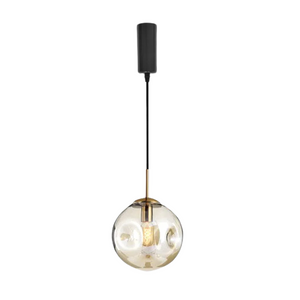
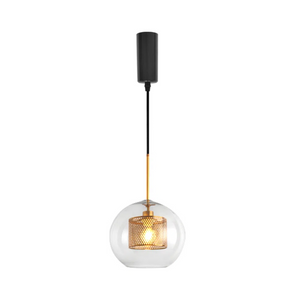


Sometimes the gorgeous, open-bottom pendant light over your dining table may not be ideal. It looks like something straight out of a design magazine... until you turn it on and you will find out that your food is lost in a harsh shadow, and you’re staring at a blindingly bright bulb every time you look up.

This is the most common complaint with modern, industrial, and vintage-style pendants, especially drum shades and clear glass fixtures. They give you style, but they cannot gurantee you with the level of comfort you need.
But here we are talking about the the good news! The fix is incredibly fast, cheap, and doesn't require an electrician. This 10-minute guide will show you how to install a simple light diffuser that will eliminate harsh glare for good and transform your room’s ambiance.
Why Your Pendant Light Fixtures Need a Makeover
We've been conditioned to think that "brighter is better." We install high-lumen LED bulbs into fixtures that were never designed to handle them. The result is a home filled with uncomfortable, functional light instead of a warm, inviting atmosphere.
A-list interior designers know the secret: it’s not about the fixture; it’s about the quality of the light. Soft, diffused light is the key to a professional-looking and comfortable space.
The Glare Problem Nobody Talks About
Glare is the unofficial enemy of interior design. It’s that uncomfortable, often painful brightness that occurs when you look directly at a light source.
- In the Dining Room: Direct glare from an open pendant creates a "spotlight" effect. It makes your dining table feel like a stage, creating harsh shadows on people's faces and making intimate conversation feel clinical.
- In the Kitchen: Over a kitchen island, glare reflects off shiny countertops—like quartz or marble—and bounces straight into your eyes, causing eye strain while you're trying to prep food.
- In the Living Room: An overhead fixture with a bare bulb makes it impossible to relax on the sofa and look up without seeing spots.
To solve the problem, you don't need a new light fixture. You just need to control the light you have.
How to Install Pendant Light Diffusers Like a Pro

This DIY is perfect for any pendant light with an open-bottom shade, like a drum, bowl, or cylinder. The "diffuser" is simply a thin, translucent disc—usually made of frosted acrylic—that sits at the bottom of your shade. It hides the bulb, blocks the direct glare, and scatters the light into a soft, even glow.
What You'll Need Before Starting
This is a simple project. The only "specialty" item is the diffuser disc itself, which you can buy pre-cut online or have cut at a local plastics shop.
- A Pendant Light Diffuser: A thin (1/8 inch or 3mm) frosted white acrylic or polycarbonate disc.
- Tape Measure: To get a precise measurement.
- Step Stool or Ladder: To safely reach your fixture.
- Microfiber Cloth: To wipe off fingerprints, if you don't care,just skip this step!
- (Possibly) a Screwdriver: Only if your shade is held by set screws.
Step-by-Step Installation Guide
From start to finish, the installation (once you have the diffuser) takes less than 10 minutes.
Step 1: Safety First!
Before you touch any light fixture, go to your circuit breaker and turn off the power to that room. Flick the light switch to confirm it’s 100% off.
Step 2: Measure Your Shade's Opening
This is the most important step. Use your tape measure to find the inside diameter of the bottom opening of your pendant shade. You want the diffuser to sit just inside the bottom lip of the shade. Measure twice!
Pro-Tip: If you're ordering a custom-cut disc, subtract 1/16th of an inch (or 1-2mm) from your measurement. This gives you a tiny bit of "wiggle room" so the disc slides in easily. However, it's important to note that industry standard tolerances for custom-cut acrylic are often much tighter, so always confirm with your supplier before ordering.
Step 3: Get Your Diffuser
You can buy pre-cut diffuser discs in common sizes (e.g., 10", 12", 16") from online lighting retailers. If your pendant is an odd size, you can have a "frosted white" or "opal" acrylic disc custom-cut at a local plastics store or online. For fully tailored lighting fixtures, Kiven Lighting offers custom lighting solutions to match your unique specifications.
Step 4: Access the Shade
Most drum pendants are held in place by a large retaining ring that screws onto the bulb socket.
- Turn off the power (Step 1).
- Carefully unscrew the light bulb.
- Reach up inside the shade and unscrew the retaining ring.
- Gently lower the shade.
Step 5: Install the Diffuser Disc
With the shade off, simply place your frosted acrylic disc inside. It should rest flat on the bottom lip of the shade.
Step 6: Reassemble and Test
- Carefully re-hang the shade, placing it back over the socket.
- Screw the retaining ring back on, making sure it's snug.
- Wipe down the diffuser and shade with your microfiber cloth to remove any fingerprints.
- Install your light bulb (an LED bulb is recommended, as it runs cool).
- Turn the power back on at the breaker and flip the switch.
And then, ta-ta- be prepare to be amazed!
Dining Room Pendant Light Transformation Results

The difference isn't subtle; it's dramatic.
Before and After Comparison
- Before: You had a "point source" of light. This is a bare bulb that casts a harsh, cone-shaped light downwards. It creates sharp shadows, reflects off water glasses, and is unpleasant to look at.
- After: You have a "surface source" of light. The entire diffuser disc is now the light source. It glows evenly, casting a wide, soft light that fills the space. Shadows are gentle, faces are beautifully illuminated, and the room feels instantly more expensive and comfortable.
Measuring the Impact on Your Space
The real impact is on the feeling of the room. Your dining room is no longer just a place to eat; it's a place to be. Conversations will last longer. You'll find yourself using the space more often because it’s no longer an uncomfortable, over-lit interrogation box. You’ve successfully added a layer of ambient light that was missing before.
Beyond the Dining Room: Other Applications
This 10-minute trick isn't just for the dining room. Any open-bottom pendant can be improved.
Kitchen and Bathroom Pendant Lighting Ideas
- Kitchen Island Pendants: This is the #1 place for this upgrade. Installing diffusers in your kitchen island pendants stops that blinding glare that reflects off your shiny countertops. It provides a better, more even light for chopping and cooking.
- Bathroom Pendants: If you use small pendants in your bathroom in place of traditional vanity lights, diffusers are a must-have. They provide the kind of soft, even light you need for makeup and grooming, eliminating the harsh, unflattering shadows that bare bulbs create. For other stylish bathroom options, our collection of wall lighting & sconces offers elegant alternatives to traditional fixtures.
Troubleshooting Common Installation Issues
-
Problem: My diffuser disc is slightly too big and won't fit.
Solution: Don't force it! You can easily sand down the edges of an acrylic disc with a piece of medium-grit sandpaper. Just sand a little at a time until it slides in smoothly.
-
Problem: My diffuser disc makes the light too dim.
Solution: Your diffuser is likely too thick or opaque. Make sure you're using a translucent white acrylic, not an opaque one. You can also try a bulb with a slightly higher lumen output—since the light is diffused, the brightness will be comfortable.
-
Problem: The diffuser is discoloring or warping.
Solution: Your bulb is too hot and too close. This is a common problem with old incandescent bulbs. Switch to an LED bulb immediately. LEDs run cool, are more energy-efficient, and will not damage your diffuser. If you notice any flickering after switching bulbs, it might be due to other issues, which you can learn more about in our guide to why LED lights flicker.
Transform Your Pendant Lighting in Just 10 Minutes

You don't have to live with a beautiful fixture that hurts your eyes. In just 10 minutes, you can dramatically improve the quality of your home's lighting with a simple, inexpensive DIY diffuser.
By turning that harsh point of light into a soft, glowing surface, you've done more than just fix a glare problem—you've elevated your entire room, transforming it from a space that's just "lit" to one that's "illuminated."
Ready to complete your lighting project? While you're at it, explore Kiven Lighting's collection of LED bulbs that pair perfectly with your newly diffused fixtures for a complete, comfortable, and energy-efficient solution.
FAQs
Q1: What material is best for a DIY light diffuser?
A: The best material is translucent white acrylic (also known as "milky," "opal," or "frosted") in a 1/8" (3mm) thickness. It offers the perfect balance of diffusion and light transmission.
Q2: Will a diffuser make my pendant light dimmer?
A: A diffuser reduces glare by scattering light, not by significantly cutting brightness. You will lose a very small percentage of light output, but the light will be far more pleasant and usable. The room will often feel better lit because the light is evenly distributed instead of being trapped in one harsh spot.
Q3: Where can I buy a pendant light diffuser disc?
A: You can find pre-cut discs in standard sizes on lighting supply websites and major online retailers. For custom sizes, search for "custom-cut acrylic" or visit a local plastics fabricator.
Q4: Can I just use frosted spray paint on my clear shade?
A: While you can, it's very difficult to get a perfectly even, streak-free finish. A drop-in acrylic diffuser is a cleaner, more professional, and completely reversible solution.